Mental Health America report: NE states have lower prevalence of mental illness, better access to care

The prevalence of mental health concerns among U.S. adults has not changed significantly from 2021-2022, with 23.4% or 60 million people reporting a mental illness. Concerns among youth ages 12 to 17 has decreased with major depressive disorder going from 18.10% to 15.40% and serious thoughts of suicide falling from 12.30% to 10.10%.
However, 11.3% or 2.8 million youth said they had impaired function at school or home resulting from mental health issues and three million reported frequent thoughts of suicide.
These results and others are derived from the latest report by Mental Health America, a national nonprofit that collected data from all 50 states and the District of Columbia. Its goal is to measure the status of adults and youth for policy and program planning analysis and to guide decision making and spark change at the state and national level.
Other national data showed 17.7% of adults reporting a substance abuse disorder or 46 million people and 5.5% or 14 million individuals noting they experienced serious thoughts of suicide over the past year.
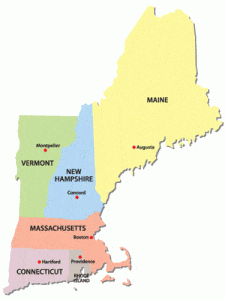
When ranking the states overall, the study noted placing in the first to 13th range meant a lower prevalence of mental illness and higher rates of access to care. In New England, the rankings were as follows: Vermont, fourth; Massachusetts, sixth; Maine, eighth; Connecticut, ninth; New Hampshire, 20th; and Rhode Island, 24th.
New York placed first while Wyoming was 51st.
For comparison, the overall youth data showed Vermont ranked second, Massachusetts, fourth, Maine, 16th, Connecticut 21st, New Hampshire 24th and Rhode Island 28th.
New England states, when ranked for substance use issues, had four in the 39-51 range, which means a higher prevalence of disorders. They are Rhode Island, 40th; New Hampshire, 44th; Vermont, 45th and Maine, 49th. Connecticut was 21st, while Massachusetts ranked 30th.
In contrast to this data, access to care in the New England states was positive—with Vermont ranked first; Maine, second; Massachusetts, third; New Hampshire, fourth; Connecticut, 9th and Rhode Island, 10th.
Other key findings include:
• Massachusetts having the largest increase in suicide ideation among adults, going from 4.36% in 2021-2022 to 6.07% in 2022 to 2023.
• New Hampshire placing 51st for youth prevalence of mental illness at 22.71%. For comparison, the national average was 18.82%.
• Maine had the highest percentage (15.36%) of youth with serious thoughts of suicide and ranked 51st in this category. The national average was 12.87% or 3.3 million people.
• For youth flourishing (showing interest in learning new things, working to finish tasks, and staying calm while facing challenges), the range in New England states was 14th for Massachusetts (61.70%) to Maine in 47th (55%).
• Nationwide, 77% of adult respondents said they did not receive the treatment they needed for substance abuse. The most cited reasons were people thought they should handle the issues on their own; they were not ready to start treatment; and not prepared to cut back on drug or alcohol intake.
• Massachusetts and Vermont were ranked first and second for having students identified with an emotional disturbance in K-12 and on an individualized education program (IEP).
The report noted substance use decreased in youth during the COVID pandemic and remained low even after returning to school. The number of eighth to 12th graders who reported abstaining from alcohol, marijuana, and nicotine was the highest recorded since 2017.
Other data indicated the ratio of mental health providers has not kept pace with the number of people who need behavioral health care.
Significantly, one-third of the U.S. population or 122 million live in a mental health workforce shortage area. The American Psychological Association said that six in 10 psychologists are not accepting new patients. The number one barrier to recruiting and retaining the behavioral health workforce is low reimbursement rates.