
Poetry in a time of war
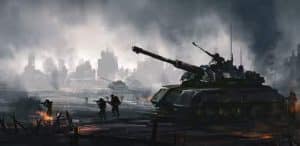
April is National Poetry Month, but this year it is also the second full month of our involvement in a new war in the Middle East. On the face of things, it seems trivial to talk about poetry when bombs are falling and people are dying. And yet, if poetry offers benefits for our psychological health as centuries of human experience say it does, then it is worth taking up the challenge and the opportunity to reflect on the uses of poetry in times of war.
The challenge is obvious. When the sirens blare and the bombs fall, what good are a few lines of iambic pentameter to someone running for shelter? Can a poem deflect a missile, shield a person from flying shrapnel, or put together a broken body? Who has time for a poem when they are dodging bullets? And yet, every war has generated its share of poetry, the best of which lives on to be read and contemplated anew every time our peace is shattered by another war.
Herein lies the opportunity to try to discover the secret of these poems’ staying power–what it is about the arrangement of words on a page that brings us back to them in the most dire of circumstances.
Every day, the headlines bring the latest information about our current war in stark words, the first strike, the scope of the retaliation, the casualties, the extent of the destruction, the anguish of the families who have lost everything. Television and online news and commentary amplify the devastation and seek to bring understanding to the chaos, but poets know that is not enough. As William Carlos Williams once wrote, “It is difficult / to get the news from poems / yet men die miserably every day / for lack / of what is found there.”
And what do we find in poems? Robert Frost stressed the power of poetry to bring understanding, expression, and structure to some of our most troubling emotions. Understood in this way, the work of the poet is like that of the psychotherapist. Like the therapist, the poet works to help people put thoughts and words into the inchoate stirrings of the heart.
We both know the importance of naming, understanding, and channeling feelings and impulses toward constructive ends or at least away from destructive consequences. We both appreciate the importance of structure in achieving this goal. What therapists do with coping strategies, poets achieve by arranging words according to the principles of rhyme and/or rhythm and the configuration of lines on the written page.
One of the earliest and most extensively studied war poems is Homer’s “Iliad,” an oral epic about the legendary Trojan war generally thought to have been written down in the eighth century BC.
The work is still with us almost 3,000 years later. In his 1994 book, “Achilles in Vietnam,” psychiatrist Jonathan Shay argues that the “Iliad,” retains its importance because it illustrates the psychological changes that combatants undergo leading to the deep emotional scars that we know today as PTSD.
He suggests further that before it was put in written form, the oral tradition of the “Iliad” was popular during the frequent wars between Greek city states because its dramatic performance brought some relief to the traumatized soldiers who watched it.
And so, it continues in times of war throughout history. Poets glorify wartime deeds, criticize campaigns doomed to fail, lament the deaths of fallen warriors and civilian bystanders, describe the devastation of city and countryside, and offer comfort to survivors and wisdom to a world that doesn’t seem to be listening.
After the 9/11 attack on the United States, Matthew Arnold’s 1867 poem “Dover Beach” was often quoted as we looked for words to name our sorrow, confusion, and horror. Arnold sets the scene of his poem on Dover beach within sight of the French coast across the English Channel. The water is calm, the night air is sweet, but if you listen carefully, you can hear the harsh grating sound of pebbles being thrown onto the beach by the breaking waves.
The poet calls this “the eternal note of sadness” that has echoed down through the ages since Sophocles heard it on the Aegean. It is a note of mourning for the lost innocence of a world ravaged by war and deserted by faith.
Arnold tells us that the only remedy for this repeating cycle of misery is love and ends the poem with an image of two lovers, “true to one another… /… here as on a darkling plain / Swept with confused alarms of struggle and flight, / Where ignorant armies clash by night.”
It is a grim picture and an accurate description of what many of us were feeling when terrorists felled the twin towers and attacked the Pentagon on September 11, 2001. The world is still at war, and poets are still giving voice to our suffering but also to our dream for a better world. Simon Armitage, England’s poet laureate, concludes his poem “Resistance” about the war between Ukraine and Russia with these lines, “an air-raid siren can’t fully mute / the cathedral bells – / let’s call that hope.”
And let’s keep working to turn that hope into peace.