The bitter cocktail of stress and politics

By Eileen Weber
February 2nd, 2026
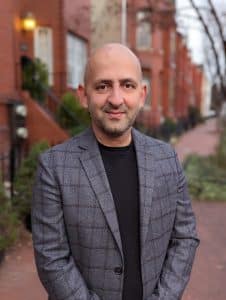
Arash Javanbakht, M.D., is director of the Stress, Trauma, and Anxiety Research Clinic at Wayne State University in Michigan.

To discover how politics can affect mental health just ask anyone who has attended a family gathering when it becomes a topic of conversation.

It is not just anecdotal; it’s research-based.

The American Psychological Association’s “Stress in America,” survey showed that more than three quarters of Americans felt physically and mentally distressed over politics. They reported that the future of the country was a significant source of stress in their lives.

Whether the subject is immigration, health care, transgender rights, tariffs or something else, what can be done been to alleviate the anxiety and depression that these issues can produce?

Arash Javanbakht, M.D., director of the Stress, Trauma, and Anxiety Research Clinic at Wayne State University in Michigan is the author of “AFRAID: Understanding the Purpose of Fear and Harnessing the Power of Anxiety.”

Javanbakht said the key to stress and politics is balance. Avoiding the news completely is not a good idea, nor is it sustainable. But repeated exposure to it is also not healthy. Watching the news for hours often does not provide new information, only emotional burden. Javanbakht suggested reading the news rather than watching it, then stopping once you have gotten the information you need.

He also discussed what he called “learned helplessness.” We see a constant stream of “breaking news” on television and online and it can make us feel powerless.

“Helplessness comes from uncertainty and the lack of ability to do something about it,” he said. “You can’t just be a passive observer of garbage. You need to take action. Turn your negative energy into action—any activity that can help society. Donate. Volunteer. It gives you a sense of control.”

He also pointed to what is not action.

“Getting into a fight online is not political activism,” Javanbakht said.

But those online fights stem from anger and aggression toward a perceived enemy and that’s precisely what Javanbakht believes politicians and the media have done — harnessed fearmongering to gain an audience.
By “otherism” or dehumanizing a group of people, “we put other people in the category of ‘lesser’ or ‘evil.’ We are fed with the idea that different is bad and bad should be eliminated. We then have a loss of empathy for what is different,” he said.

Christy Denckla, Ph.D., is an assistant professor of social and behavioral sciences at the T.H. Chan School of Public Health at Harvard University.

Christy Denckla, Ph.D., is an assistant professor of social and behavioral sciences at the T.H. Chan School of Public Health at Harvard University.

Christy Denckla, Ph.D., is an assistant professor of social and behavioral sciences at the T.H. Chan School of Public Health at Harvard University.

She also leads the school’s Population Wellness Lab which studies the effects of adversity, trauma, loss, and bereavement on mental and physical health.

She promoted the idea of curating your exposure to the news and doing activities that support wellness. Based on her research, chronic stress can manifest itself not only mentally, but physically.

Breathing, mindfulness, exercise, and creating a safe social network are all things that can foster self-care.

“It’s not a one-size fits all,” she said. “You need to provide yourself with a tool kit and pick one of the tools that works.”

Denckla also discussed the same disturbing trend in a politically polarized environment: dehumanizing the other side. “When people become separated from their humanity, empathy is lost,” she said.

Leave a Reply

Your email address will not be published. Required fields are marked *